The church, the earthquake and the rebuild
Saint Paul's Church, Lisbon
The history of Saint Paul's Church in Lisbon: its 16th-century origins, the 1755 earthquake and the Pombaline rebuild where the guitar concerts play.
Reserve a seat at Saint Paul's ↗A church with 16th-century roots
The Church of São Paulo in Lisbon dates back to the 16th century, according to its parish. Portuguese Wikipedia gives the same century for the first building. For centuries it was the only church in Portugal dedicated to Paul, the Apostle of the Gentiles, which is why it is affectionately known as São Paulo da Cidade. The organiser of the guitar concerts adds that the parish history goes back to the era of Portugal's great voyages and to the foreign merchants who settled in the area.
The morning of 1 November 1755
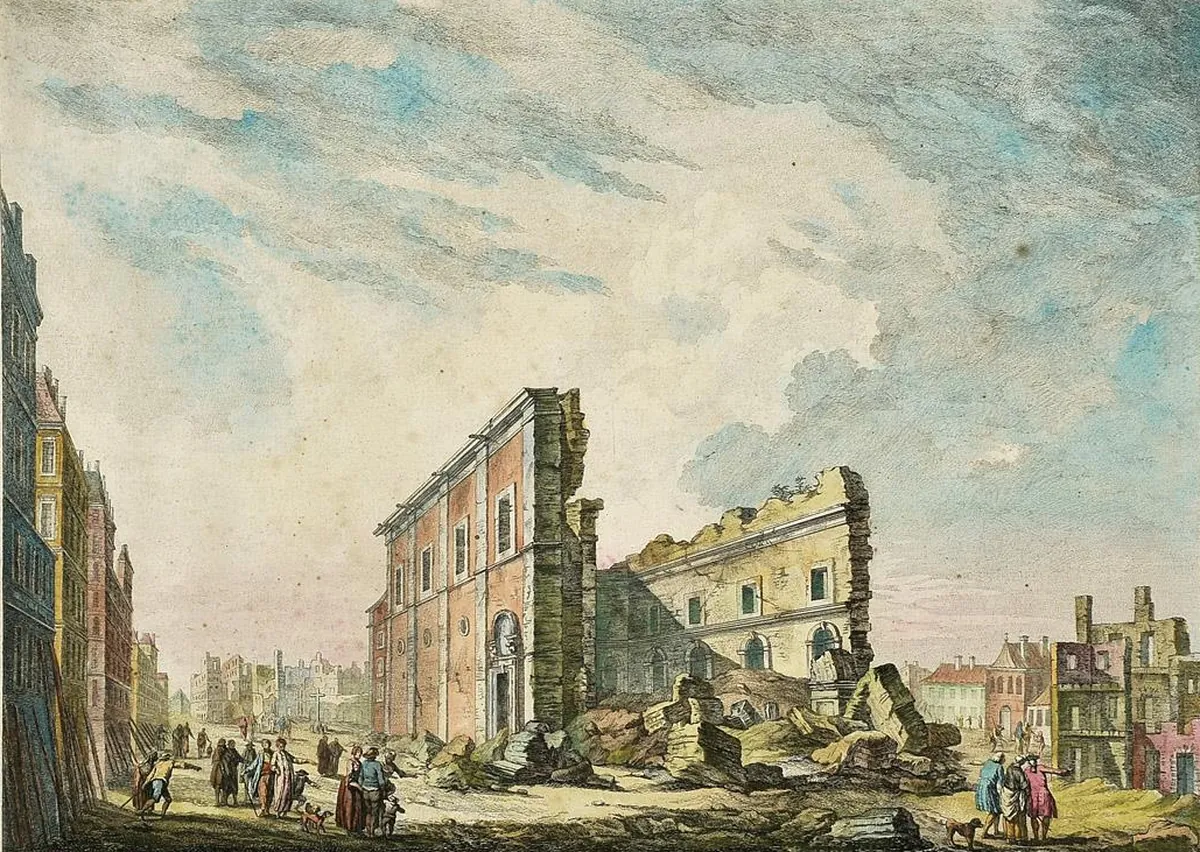
On the morning of 1 November 1755, All Saints' Day, the Great Lisbon earthquake struck, followed by a tsunami and fires. English Wikipedia gives a death toll in Lisbon of around 30,000 to 40,000. Portuguese Wikipedia says the earthquake and the fire that followed destroyed much of the church. A coloured print by Jacques Philippe Le Bas, dated 1757, shows the ruins of the church among rubble and small figures in the street.
Rebuilt from 1768
Portuguese Wikipedia says the present building was rebuilt in 1768 to a project by the architect Francisco Remígio de Abreu. The parish tells a story that the Marquis of Pombal visited the ruined church soon after the earthquake and ordered its speedy reconstruction, and it introduces this as a tradition rather than a record. The rebuilt church is the one on Praça São Paulo today, with two bell towers flanking a central body and a triangular pediment.
What Pombaline means
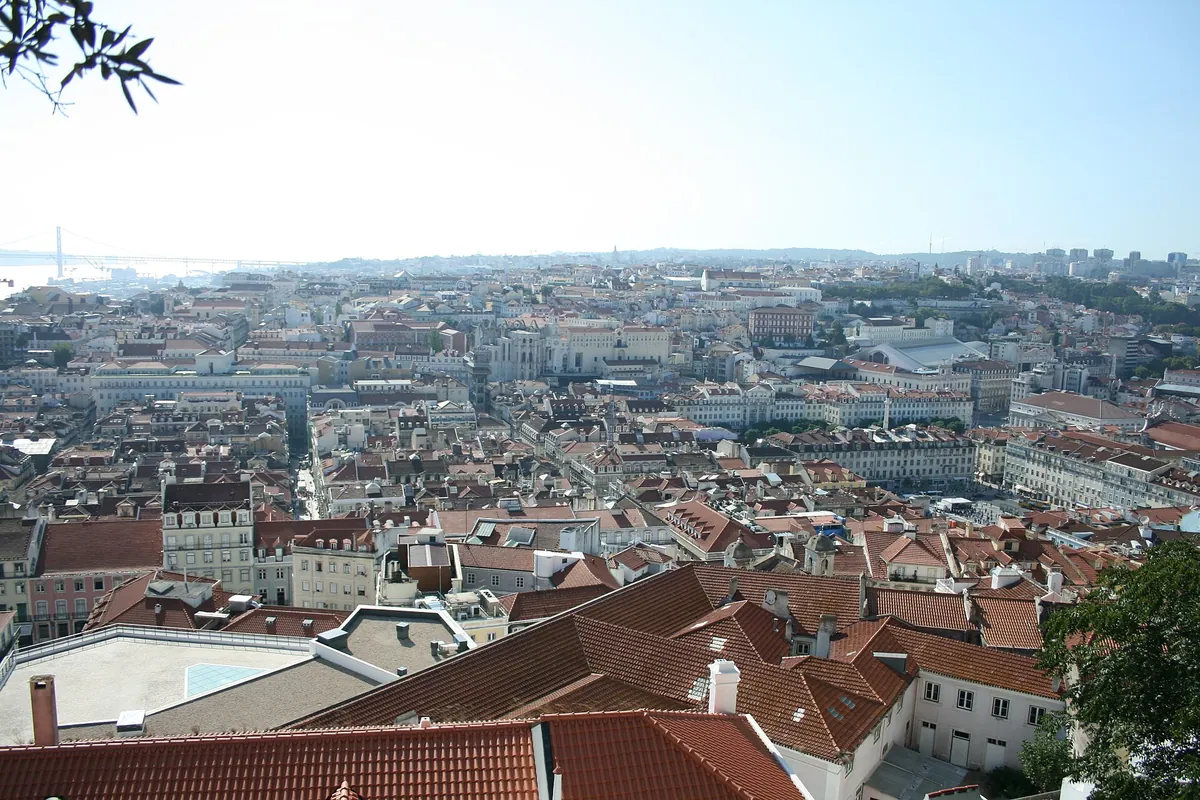
The Pombaline style takes its name from the Marquis of Pombal, who supervised the rebuilding of Lisbon after 1755. It is a restrained, rational 18th-century style, with straight lines and simple decoration, partly because money was short and the need to build was urgent. The parish says the Pombaline reconstruction gave the church a sober architecture. The Baixa district nearby is the best-known Pombaline area, laid out on a grid and built with early earthquake-resistant methods, so the church belongs to a city-wide rebuild.
The square and its fountain
The organiser of the concerts says the square served as a bustling market and that it later received a limestone fountain. Its description calls the fountain a testament to the neighbourhood's resilience. The organiser says the area's commercial importance helped it rebuild quickly after 1755. The square today is quieter than its market past, and the church's two towers still mark it. The concert audience gathers in front of the church before going to a private part of the building.
What a visitor can see
The GetYourGuide ticket for the guitar concert lists a visit of the church along with the concert, which takes place in a private area of the church that is not open to the regular public. The organiser calls that room the sacristy. Opening hours for the church itself are set by the parish, so check with it if you want to see the building at another time. The ticket lists the visit of the church together with the concert.
Frequently asked questions
When was Saint Paul's Church rebuilt?
Portuguese Wikipedia says the present building was rebuilt in 1768, after the 1755 earthquake and fire destroyed much of the earlier church.
Who designed the rebuilt church?
Portuguese Wikipedia credits the architect Francisco Remígio de Abreu with the project for the rebuild.
Can I visit the church without the concert?
The parish decides the church's opening hours, so ask it directly. The GetYourGuide concert ticket lists a visit of the church together with the concert.
Sources